Blog Archives
How to dress your dog like a Brit
Last week, I posted “How to dress your kids like Londoners” and before the metaphorical ink was dry, I could almost immediately hear the united sighs and bellows of American dogs everywhere, as if to say, “But what about us?”
In an effort of fairness, I’m happily submitting today’s post.
I haven’t put together a list of flat caps (or, heaven forbid, tiaras) or Sherlock Holmes costumes for dogs because I do think that a true British dog is far too noble and dignified for such things (American dogs, well, that’s a dog of a different color …).
Below is a collection of items that will bring out the British in your dog (regardless of whether he’s really a French poodle or an Irish setter).

Shown above, beginning to the right of the British bulldog puppy and moving clockwise: Union Jack Collar by Mascot, Furnam & Muttson Squeaky Dog Toy and British Flag Dog Bed by Jonathan Adler.
Have a fabulous weekend! Enjoy these last dog days of summer before fall sets in.
4 ingredients for a great cuppa

Every Brit has a secret to a great cuppa. After all, we’re talking about a nation of tea drinkers. Our family relies on these four ingredients: 1. Breville One-Touch Tea Maker, a real luxury but it is programmable so you can wake up to freshly brewed tea. 2. Chicken-Shaped Tea Cosy keeps the teapot warm. 3. Crate and Barrel Tea Bag Squeezer helps get every last drop from the tea bag. 4. Twinings Everyday Teabags makes a tasty brew of classic “builder’s tea.”
Brits are full of beans
For most Americans, Heinz is synonymous with ketchup.
But in the UK, well, “Beanz Meanz Heinz” (as their ad slogan goes).
Brits simply can’t live without Heinz baked beans. It’s an icon. It’s a staple. And it’s not just a good alternative to homemade beans. It trumps it every time.
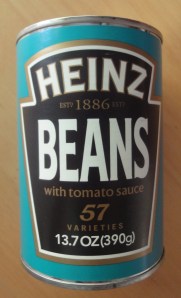
Baked beans are always included on the plate of the quintessential full English breakfast (which includes fried eggs, sausage, bacon, fried bread or buttered toast, grilled tomato, sauteed mushrooms and sausage made of pig’s blood AKA black pudding). It livens up any snack of cheese on toast (another simple British classic). It’s also a very common topping for jacket potatoes (translation: baked potatoes).
Personally, I’m not a fan of American baked beans in any context. Not camping, not at a barbecue and certainly not as an accompaniment to hot dogs (and don’t even mention pork and beans to me, unless you want to see me gag).
Yet there is a place in my heart for Heinz baked beans and I’m definitely not the only one. Thankfully, it is available at any Cost Plus World Market in the US.
The search for the ultimate scotch egg

The cause of many a coronary: The unassuming scotch egg. Photo credit: David Sillitoe/Guardian
Leave it to the Brits to come up with something as creatively fatty as the Scotch egg.
You start with a hard boiled egg. Then envelop it in sausage meat. Then roll it in breadcrumbs and lastly deep fry the whole thing. I think of it as the UK’s turducken but it is a British picnic delicacy. The kind of thing that Ratty would have packed in a picnic hamper in “Wind in the Willows,” along with a selection of pork pies and sausage rolls.
The London department store Fortnum & Mason claims to have invented it over 200 years ago. But these days, you generally find scotch eggs in the refrigerated section of a soulless service station or supermarket, wrapped in cellophane, looking more like a paperweight than something you would actually eat, much less enjoy cold.
I should add that the only thing worst than eating a service station scotch egg is watching someone eating a service station scotch egg or, worst yet, being trapped in a car watching someone eating a service station scotch egg. It’s the stuff that Dante’s ninth ring of hell was made of.
In its natural state, piping hot out of the fryer served with a pint and a view of the river, I think it’s probably glorious. Those visiting The Ship in Wandsworth on Sept. 20 will find out first hand when the pub hosts its first ever scotch egg challenge. Anyone is invited to submit their winning egg for a chance at the title of, well, the ultimate scotch egg and all the bragging rights that accompany it. A panel of judges will determine the winner. For more information, visit The Ship’s website or follow along on Twitter using hashtag #ScotchEggChallenge.
You say tomato, I say tomahto
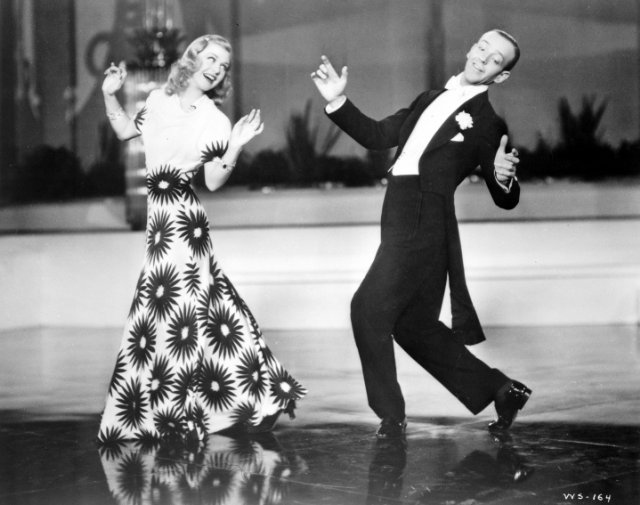
In 1937, George and Ira Gershwin’s song “Let’s Call the Whole Thing Off” was featured in a film called “Shall We Dance” with Fred Astaire and Ginger Rogers. It was apparently part of a dance number done on roller skates.
I haven’t seen the movie but I love the song. Correction – we love the song and over the years, Matthew and I have come up with quite a medley of verses as we have discovered the slight differences in pronunciation between British English and American English. Our song goes something like this …
You say scheduled, I say sheduled,
You say oREGano, I say oreGAHno,
Scheduled, sheduled
oREGano, oreGAHno,
Let’s call the whole thing off.
You say aluminum, I say aluminium,
You say mom, I say mum,
Aluminum, aluminium,
Mom, mum,
Let’s call the whole thing off.
You say wahter, I say wohtah,
You say BAYsil, I say BAAAzil,
Wahter, wohtah,
BAYsil, BAAAzil,
Let’s call the whole thing off.
You say garAHj, I say gare-edge,
You say airplane, I say aeroplane,
GarAHj, GARE-edge
Airplane, aeroplane,
Let’s call the whole thing off.
We can sing like this for quite a while. Can you add a verse?
The cute-ification of things

Aww ... look at the little bitty pressie!
Brits like to cute-ify their words. Cute-ify, you ask? Well, you know, make cuter. Cuten them up. I know, I know, “cute” is a distinctly American word. But it’s the only word that seems appropriate for the random act of adding an “i-e” to words – not in the presence of babies or small children but in everyday life amongst grown-ups. Americans don’t do this. If we’re talking about a present, we call it a present. We don’t call it a “pressie.”
Here are some other examples:
Cardigan = Cardi
Lipstick = Lippie
Chocolate = Choccie (pronounced chock-ie)
Biscuit = Biccie (pronounced bick-ie)
Sweets = Sweetie
Postman = Postie
Swimming costume = Cozzie (I just learned this one, thanks to Tori and Marti – hey, even you both cute-ified your names …)
And there are dozens more like this. Can you think of any others?
The Wally vs. Waldo debate
Grandma recently sent our son a book that brought back happy memories from my childhood:

But it prompted an obvious question from this American: Who’s Wally and what have you done with Waldo?
Is he part of a witness relocation program and if so, why didn’t they ditch that red and white striped shirt, woolly hat and glasses? Dead giveaway.
Just asking.
Well, after doing a bit of online research, I’ve discovered that Where’s Waldo was actually created by a British illustrator Martin Handford. So let it be known that Where’s Waldo‘s real name is Wally, he is British and he went missing in the UK long before he ever was stateside.
In my research, I’ve also discovered that he has other alter egos. He is Charlie in France, Walter in Germany, Holger in Denmark, Valli in Iceland, Willy in Norway and Hetti in Sri Lanka & Goa. He’s also better known as Waldo in Canada and Japan, if you were wondering.
Yeah, I think we will all sleep better tonight.
Getting stoned

"One stone" by Daniel Eatock
If you thought you’d never see the day when your weight was back in the single or double digits, weigh yourself the British way: in stone.
I still can’t help giggling when I hear people say they are whatever stone and however many pounds. It just seems like the right way to weigh a sack of potatoes, some oxen or well, stones, and the wrong way to weigh a person (and indeed stone was originally used for weighing agricultural products, so says Wikipedia).
Still, it is the standard in the UK and during the five-plus years that I lived there, I had to get used to doing the the maths (translation: math). Each stone is 14 pounds so you just need to divide your weight by 14 and voila, that’s your weight in stone. Better yet, use this handy-dandy converter.
Just don’t stone yourself if you don’t like the results. (Apologies, I couldn’t help myself.)
When your swimsuit is a costume …
I have quite a few favorite British words and expressions. Quite. A. Few. But one of my all-time favorites is “swimming costume.”
Particularly when my husband (or any man) speaks of wearing their swimming costume.
Because although they might be thinking of this:
 I’m thinking this:

As a side note to my British readers: In the US, costumes are only used when preceded by the word “Halloween.” Swimming costumes are called swimsuits or bathing suits or The Worst Torture Known to Womankind, depending on who you speak to. But never “costume,” unless you are trying to be funny (in which case, just strut down the beach wearing Borat’s mankini and call it a day).
And so, as this week comes to a close and the glorious weekend begins, throw on your swimsuit (or costume) and enjoy the last weekend of August. Dive in …. I’ll see you back here on Monday!

"Diving Board" by Jena Ardell
How to eat like a millionaire
Wanna feel like a million bucks (or pounds, depending on your currency)? Then get in the kitchen and bake this:

* Enter carol of angels *
Okay, so maybe the photo doesn’t show it for the general awesomeness that it is and it looks a lot like an ordinary peanut butter square, but make no mistake. This is Millionaire’s Shortbread, a rich confection that layers dark chocolate atop gooey caramel spread over buttery shortbread. A Twix Bar-like dessert done on a big scale. I’m not sure where this gorgeous creature got its name but it is a British classic and rightly so.
Matthew made a batch last night (I am NOT the baker in our house and would never attempt such a complex dessert), based on Roxanne’s Millionaire’s Shortbread recipe from Nigella Lawson’s How to Be a Domestic Goddess cookbook. It tastes like a million calories but in a good way.
1 1/2 cups all-purpose flour
1/4 cup sugar
1 2/3 cups unsalted butter
1 14-oz. can sweetened condensed milk
4 tablespoons light corn syrup
12 oz. bittersweet chocolate
1 9-inch square pan or similar, greased and the bottom lined with parchment or wax paper
Preheat the oven to 325 degrees F.
Put the flour and sugar into a bowl and rub in 12 tablespoons of the butter, clumping the dough together to form a ball. Press this sandy shortbread mixture into the tin and smooth it either with you hands or a spatula. Prick it with a fork and cook for 5 minutes, then lower the oven to 300 degrees F, and cook it for a further 30-40 minutes until it is pale golden and no longer doughy. Let it cool in the tin.
Melt the remaining butter in the microwave (in a large microwavable bowl) for 2-3 minutes, then add the condensed milk and golden syrup. Whisk the mixture well until the butter is thoroughly incorporated. Heat for 6-7 minutes until it is boiling, stirring thoroughly every minute. As a microwave novice, I found this bit difficult and had to watch that I didn’t burn the toffee mixture (I did once), which is why I caution you to check and stir every minute. It’s ready when it’s thickened and turned a light golden brown. Pour this molten toffee evenly over the cooled shortbread and leave it to set.
Break the chocolate into pieces and melt it in a bowl in a microwave. Pour and spread evenly over the fudge mixture (the less you touch it, the shinier it will be) and leave it to cool. Once set, cut the caramel shortbread into pieces. The squares can be stored in the fridge to keep them firm, though if it’s winter that shouldn’t be necessary.
Makes about 24.


 BRITRISH.COM