Blog Archives
Pancake Day Part Deux: Electric Boogaloo

Every Pancake Day, I completely forget the one sticking point to making good crepes: refrigerating the batter for two hours (or overnight). Sure, the crepes are delish but we end up late, the kitchen’s a mess, my evening downtime is wiped and so am I.
Not this year!
I did a Google search for “crepe recipe without refrigeration” and alakazam! There it was! A recipe from The Inadvertant Gardener for immediate satisfaction crepes, no refrigeration required.
It worked like a charm, crepes were on the table in less than a half hour, and I had my evening free to catch up on American Idol. All was right in the world. Props to The Inadvertant Gardener for giving me my time and life back on Pancake Day/Night. I owe you!
Basic crepes
(Based on the recipe from Mark Bittman’s How To Cook Everything)
(Makes 10-12 crepes, depending on the size of your pan)
1 c. flour (all-purpose or whole wheat)
Pinch of salt
1 1/4 c. milk (I used nonfat)
2 eggs
2 Tbsp. butter, melted and cooled
Whisk the flour, salt and milk together until the mixture is bubbly. Whisk in the eggs, and then the cooled butter.
Heat a nonstick skillet (I used an 8-inch skillet) until drops of water tossed in the pan skitter across the surface. You’ll probably want to adjust the heat as you go, because you want to keep the pan very hot, but not so hot as to burn the crepes.
Using a small ladle, add somewhere between 1/8 and 1/4 of a cup of batter to the pan. Swirl it so it covers the bottom. You’ll need to work quickly, because the batter should start to cook immediately, and if you don’t swirl fast, you won’t get it to cover the whole bottom of the pan. Let it cook about a minute, until the top of the crepe is starting to dry but hasn’t yet bubbled, then flip the crepe over.
Cook the second side for about 20 to 30 seconds, then remove the finished crepe to a plate. You don’t want them to be as brown as pancakes would be – just slightly golden.
Top with whatever you fancy and serve! Enjoy with American Idol!
A simple posset
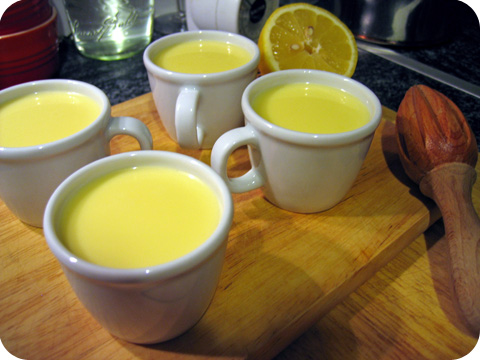 The last time we were in England for Christmas, I tasted my first posset.
That’s posset, not possum. This is England, people, not Kentucky.
And so this time of year, I always think about posset, this simple dessert made from citrus fruit, sugar, cream and sometimes eggs, which traces back to the 16th century. It’s easily made in minutes and will brighten up the darkest of winter days.
The following is a very simple recipe for lemon posset, courtesy of the BBC and chef James Martin:
Ingredients
600ml/1 pint 1fl oz double cream
150g/5oz caster sugar
2 large lemons, zest and juice only
1. Place the double cream and the sugar into a large pan over a low heat and bring to the boil slowly. Boil for three minutes, then remove from the heat and allow to cool.
2. Add the lemon juice and zest and whisk well.
3. Pour the lemon cream mixture into six large serving glasses and refrigerate for three hours.
Cheese straw success
This weekend, I did my favorite kind of baking: cheese straws. Simple. Quick. Delicious.
Now I’ve blogged before about my un-Martha-esque (or un-Nigella-esque, or un-Gordon-esque, or un-Jamie-esque) comfort level in the kitchen, but thanks to the invention of frozen puff pastry, cheese straws are one item that I can make in a mad dash, while simultaneously juggling a half a dozen other tasks.
1. Defrost puff pastry from freezer. I like the ready-to-roll puff pastry from Trader Joe’s.
2. Roll out pastry.
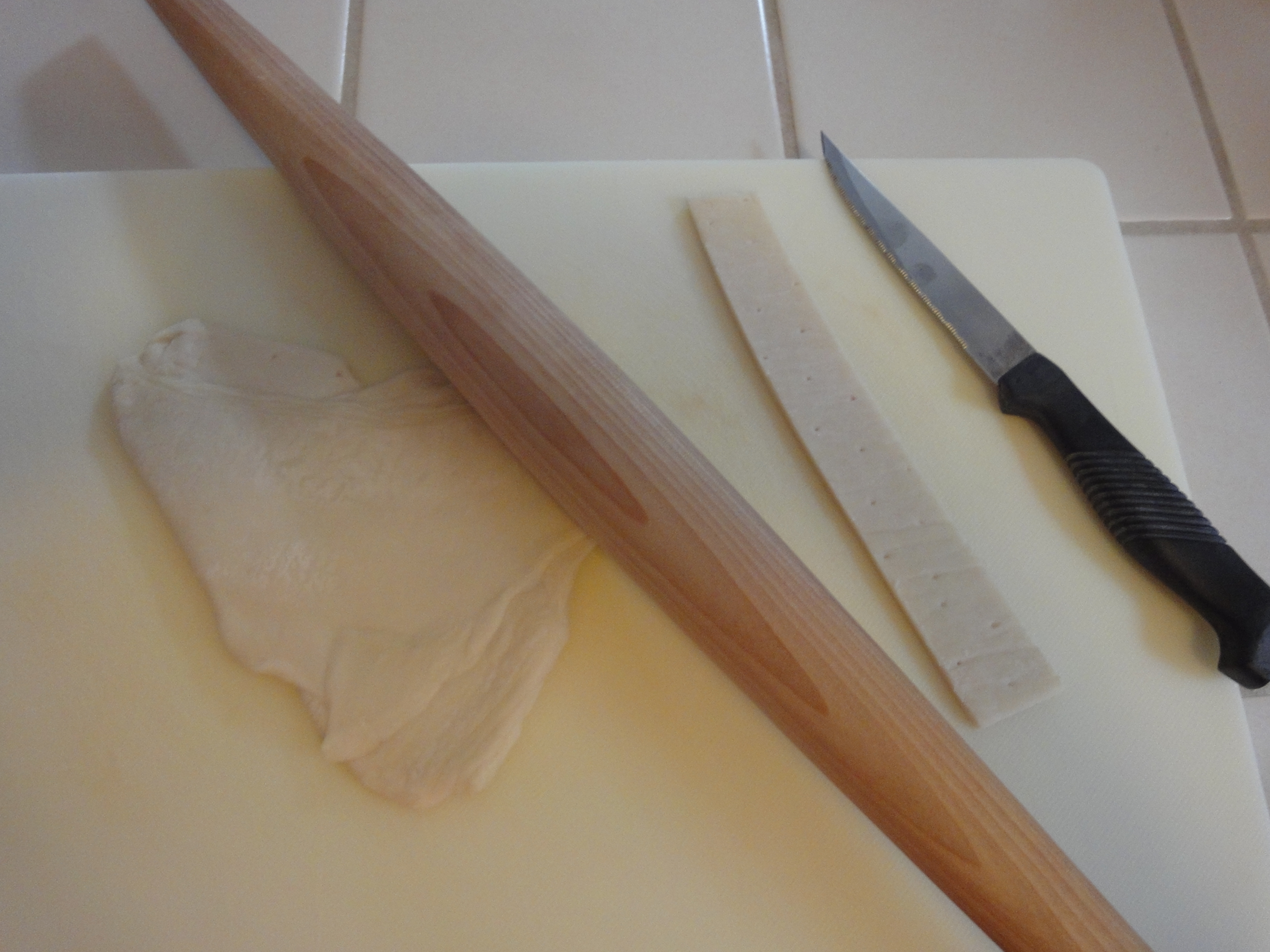
3. Slice in long strips.
4. Sprinkle with shredded cheddar (or whatever cheese you fancy) and ground black pepper.
5. Bake.
6. Take out of the oven after 10 minutes or so or when they look golden brown.

7. Serve and feel like Martha, Nigella, Jamie or whoever is your favorite celebrity (or non-celebrity) chef, as the cheese straws are scoffed up in minutes.
A weekend of baking
With the challenge of Britain’s National Baking Week set before me, this weekend I did the unthinkable: I baked.
And baked and baked and baked.
I’ll admit I was a bit rusty. I warmed up by baking brownies Saturday morning, which might have been considered cheating. I used Trader Joe’s Ready to Bake Brownies, which has to be the most user-friendly brownie mix on the market. It dulls the intelligence. Anyone capable of opening a packet, pouring contents into a greased brownie pan and sliding it into a pre-heated oven can do it. The results are fantastic, but where is the sense of accomplishment?
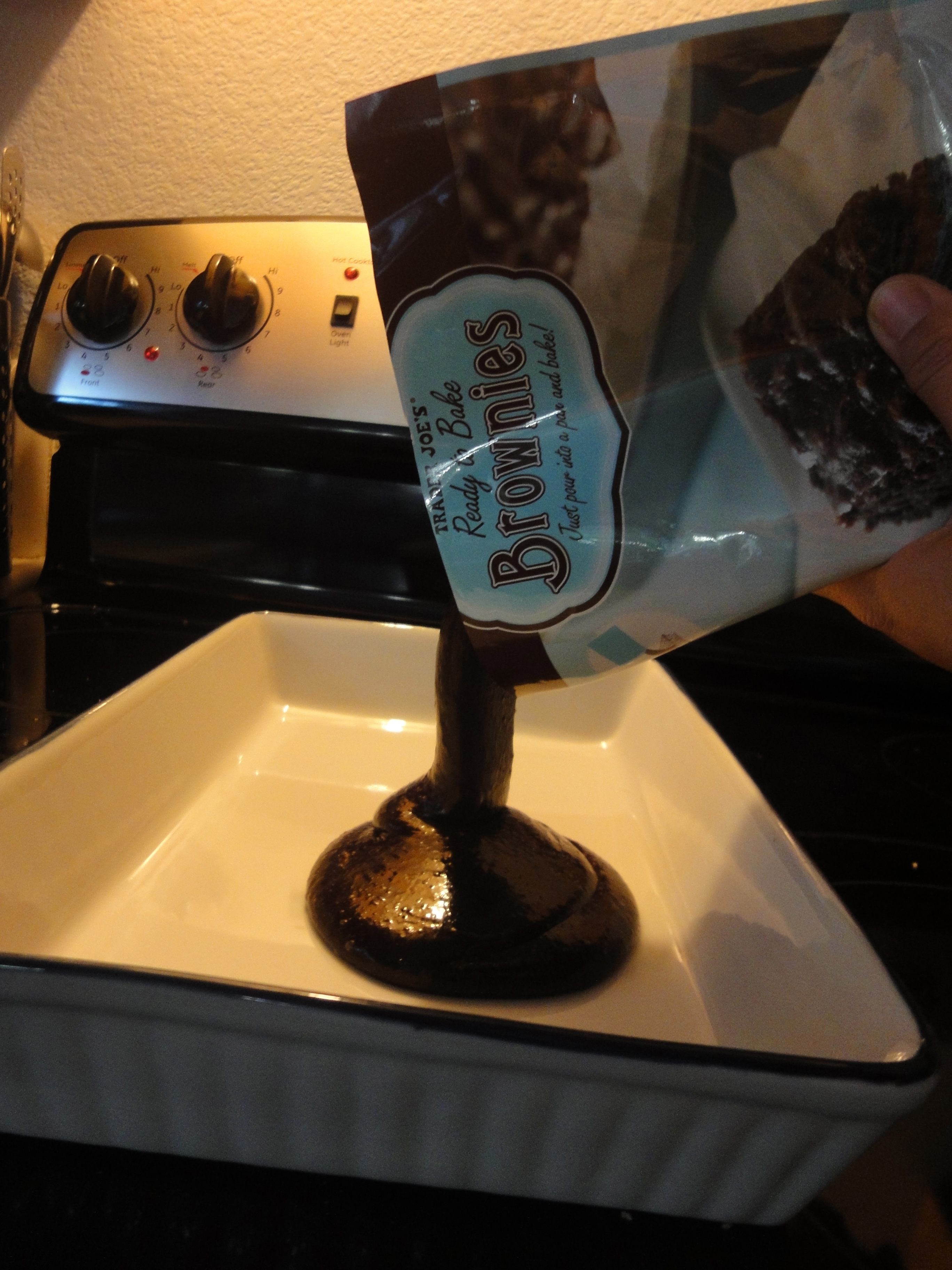
Brownies for dummies. And yes, you'll notice I forgot to grease the pan. This mix was made for me.
On Sunday, I made a two-layer yellow cake using a recipe I found online last week (yes, I’ve baked two weekends in a row. This might be a personal record) and then after I put the cake pans into the oven, I realized with dismay that I had promised my son I was going to make cupcakes, not a cake!
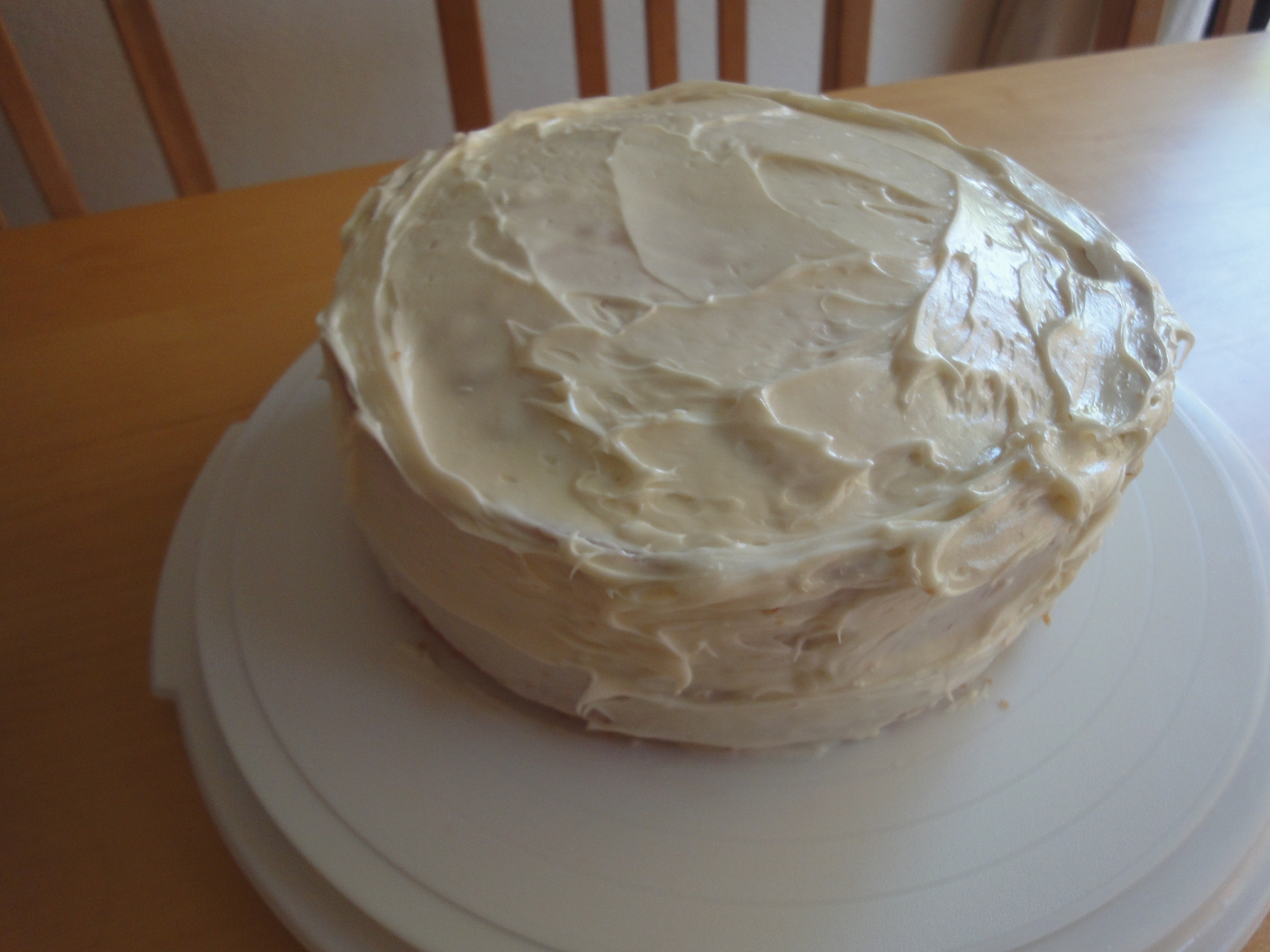
He was very brave about it and told me it was okay. We could make cupcakes another day. Which made me feel even worse and so, there began the third baking project of the weekend – cupcakes, using the same winning yellow cake recipe. In the making of this batch, I ran out of granulated sugar and was not going to make my second trip to the grocery store so I subbed the rest of the measurement with brown sugar. It ended up working out very well – moist, delicious and not too sweet. Sense of accomplishment? Oh yes!
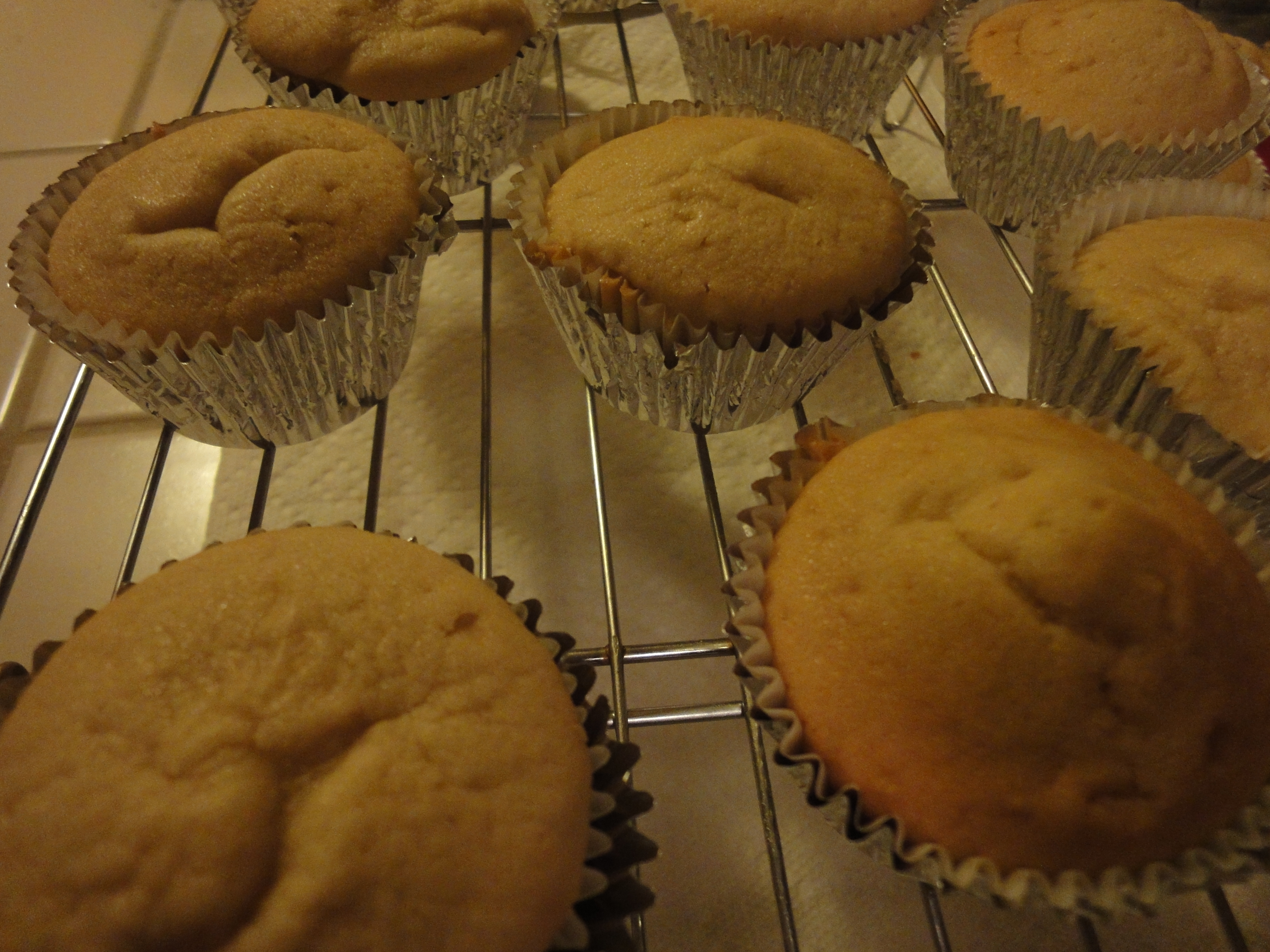
With the lack of granulated sugar in the house, I couldn’t make the homemade chocolate frosting I had planned and I didn’t have enough butter to do a traditional buttercream so I cracked open a can of Betty Crocker cream cheese frosting and called it a day. Or rather, a weekend.
Mission accomplished.
A fool-proof béchamel sauce
Béchamel sauce and I have a love-hate relationship. I mean, I love it. I love the marriage of melted butter, flour and milk, whisked quickly over heat. I love it in macaroni and cheese and in an authentic lasagne (that is, one without ricotta. Sorry, I don’t like ricotta in my lasagne, which is sadly how most Americans make it). And I love the jaunty accent in béchamel. It might as well have a beret and smoke gauloises.
But I’d say 95% of my attempts at making béchamel sauce have failed, giving me an end result of a frustratingly thin sauce, when the goal is a thick, unctuous, creamy goo.
Last night, on the spur of the moment and with a head of cauliflower in the fridge that needed to be eaten pronto, I whipped up a cauliflower cheese. For the uninitiated, cauliflower cheese is a fantastic British recipe, particular for vegetarians in your life. It’s great when paired with a roast rib of beef, but also delicious on its own. The gist is not unlike a proper homemade macaroni cheese, except we replace the macaroni for cauliflower.
And it does involve making béchamel sauce. I tried a Nigella Lawson recipe from her Feast cookbook and voila!
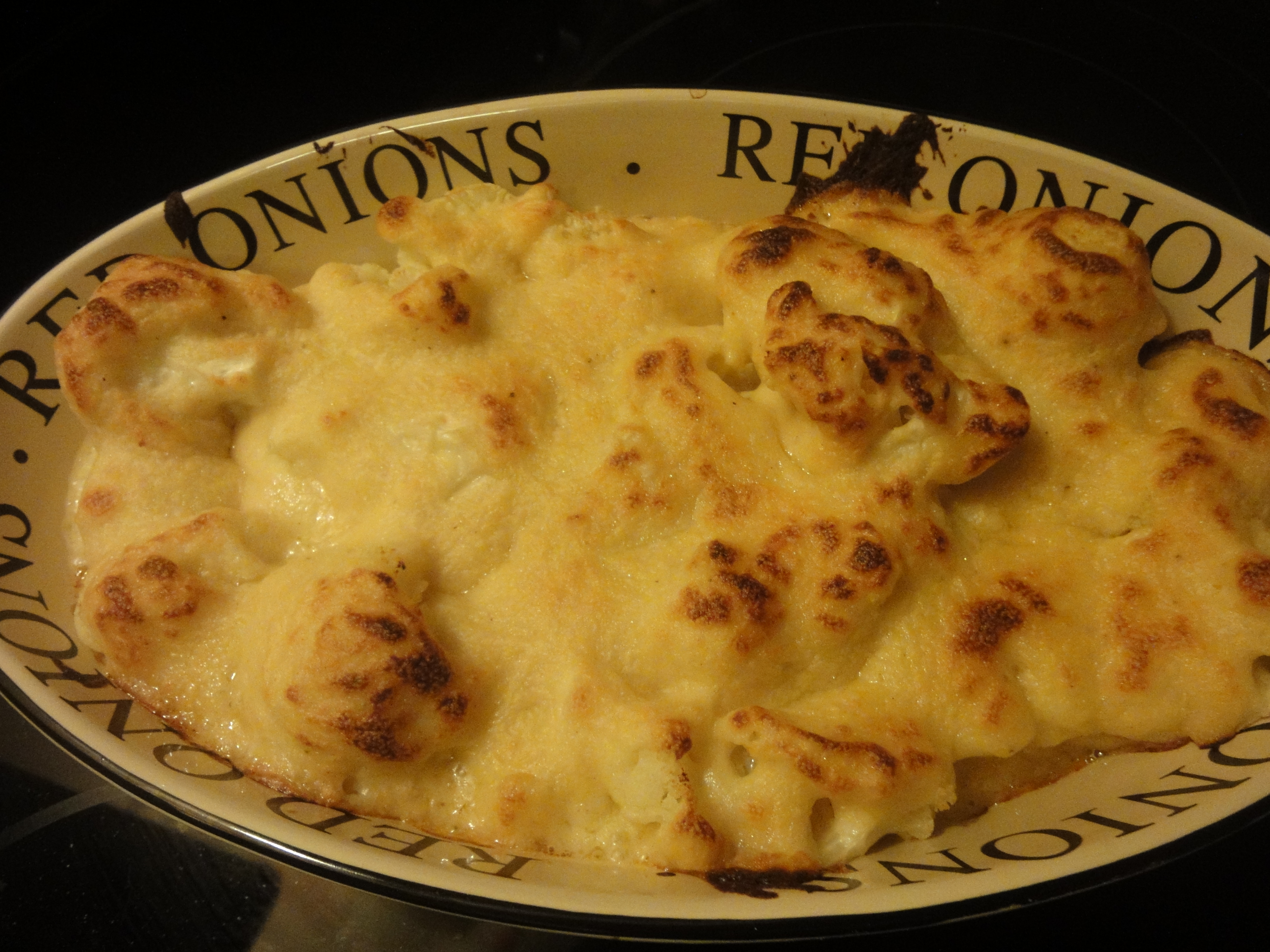
Mmm ... cauliflower cheese
It was a resounding success! Not only did the sauce turn out exactly the way I wanted, but the cauliflower was cooked just enough to be bitesome, not mushy. Bravo, Nigella! You’ve made a believer out of me.
Cauliflower Cheese
1 large head of cauliflower
2 bay leaves
1 stick of butter
2 teaspoons English mustard
1/3 cup all-purpose flour
2 cups milk
3 cups strong cheddar, grated, plus 1/2 cup for sprinkling on the top
Cut the cauliflower into small florets and and put in a saucepan with cold water and bay leaves. Sprinkle with salt. Bring to a boil, then drain and then refresh with cold water. Let the water drain in a colander. Then put the cauliflower in an even layer in an ovenproof dish.
Preheat your oven to 425 degrees. To make the cheese sauce, melt the butter in a saucepan and then whisk in flour and mustard, and cook over a gentle heat for 5 minutes. Whisk in the milk off of the heat, and then put it back on the heat and keep stirring until it becomes thick and begins to bubble.
Sprinkle in the 3 cups grated cheese and stir over heat until it has melted into the sauce. Pour the sauce over the cauliflower in the dish, and scatter remaining cheese over the top. Cook for 20 minutes or until the cauliflower is hot and bubbly and the cheese has browned slightly on the top.
How to eat like a millionaire
Wanna feel like a million bucks (or pounds, depending on your currency)? Then get in the kitchen and bake this:

* Enter carol of angels *
Okay, so maybe the photo doesn’t show it for the general awesomeness that it is and it looks a lot like an ordinary peanut butter square, but make no mistake. This is Millionaire’s Shortbread, a rich confection that layers dark chocolate atop gooey caramel spread over buttery shortbread. A Twix Bar-like dessert done on a big scale. I’m not sure where this gorgeous creature got its name but it is a British classic and rightly so.
Matthew made a batch last night (I am NOT the baker in our house and would never attempt such a complex dessert), based on Roxanne’s Millionaire’s Shortbread recipe from Nigella Lawson’s How to Be a Domestic Goddess cookbook. It tastes like a million calories but in a good way.
1 1/2 cups all-purpose flour
1/4 cup sugar
1 2/3 cups unsalted butter
1 14-oz. can sweetened condensed milk
4 tablespoons light corn syrup
12 oz. bittersweet chocolate
1 9-inch square pan or similar, greased and the bottom lined with parchment or wax paper
Preheat the oven to 325 degrees F.
Put the flour and sugar into a bowl and rub in 12 tablespoons of the butter, clumping the dough together to form a ball. Press this sandy shortbread mixture into the tin and smooth it either with you hands or a spatula. Prick it with a fork and cook for 5 minutes, then lower the oven to 300 degrees F, and cook it for a further 30-40 minutes until it is pale golden and no longer doughy. Let it cool in the tin.
Melt the remaining butter in the microwave (in a large microwavable bowl) for 2-3 minutes, then add the condensed milk and golden syrup. Whisk the mixture well until the butter is thoroughly incorporated. Heat for 6-7 minutes until it is boiling, stirring thoroughly every minute. As a microwave novice, I found this bit difficult and had to watch that I didn’t burn the toffee mixture (I did once), which is why I caution you to check and stir every minute. It’s ready when it’s thickened and turned a light golden brown. Pour this molten toffee evenly over the cooled shortbread and leave it to set.
Break the chocolate into pieces and melt it in a bowl in a microwave. Pour and spread evenly over the fudge mixture (the less you touch it, the shinier it will be) and leave it to cool. Once set, cut the caramel shortbread into pieces. The squares can be stored in the fridge to keep them firm, though if it’s winter that shouldn’t be necessary.
Makes about 24.


 BRITRISH.COM